

The traditional Japanese tea ceremony: chanoyu
The history of Japanese tea is closely linked to cultural exchanges with China and to Buddhist practice. The French Chabiothé article recalls the monk Eisai, who returned from China in the twelfth century and played an important role in promoting tea in Japan. Tea cultivation subsequently flourished in places such as Uji, near Kyoto, which remains renowned for its celebrated teas.
Tea became much more than a refreshing drink. Buddhist monks appreciated it during long periods of study and meditation. Samurai warriors and feudal lords also adopted it as part of meetings and social occasions. Over time, these customs contributed to the development of the Japanese tea ceremony, known as chanoyu or cha no yu.
The French article associates the ceremony with the Zen monk Murata Shuko and, later, the influential tea master Sen no Rikyu. These figures helped shape the aesthetics of tea preparation and the ideal of simplicity associated with wabi. Rather than being merely a way to make a drink, chanoyu became a carefully considered encounter in which the host, guests, room, utensils and gestures all matter. Respect, hospitality, simplicity, calm and harmony are central to the experience.

A ritual that expresses humility
In a traditional tea gathering, guests prepare themselves for entering the tea room. The French description evokes the washing of hands using water and a ladle, the removal of shoes and jewellery, and the historical image of warriors leaving their weapons outside. Some tea-room entrances are deliberately low, encouraging visitors to stoop as they enter. These details symbolise humility and the idea of setting everyday status aside.
The room is often uncluttered. A hanging scroll, a simple arrangement of flowers and carefully chosen utensils may be the main decorative elements. Guests take their places while the host heats water, prepares a bowl and handles each object with measured attention. The matcha is placed in a ceramic bowl, hot water is added, and the powder is whisked with a chasen to create a fine green foam. A small sweet may be served to balance the tea's bitterness.
The gestures are deliberate, not hurried. A formal gathering includes many additional details and can vary according to tea school and occasion; this account introduces the spirit of the ceremony rather than attempting to replace a complete guide to its etiquette.
Traditional tools: chasen, chawan, chashaku and sieve
Each utensil has both a practical and an aesthetic role:
- Chasen: the bamboo whisk used to blend the powder and water and develop a light froth. Its many fine tines help disperse the matcha evenly.
- Chawan: the matcha bowl, wide enough to allow vigorous whisking and also used to serve the drink.
- Chashaku: a slender bamboo scoop traditionally used to transfer the powder to the bowl.
- Fine sieve: useful for removing lumps from matcha before adding water. Fine powders tend to clump in storage, so sifting improves texture.
- Kettle and water vessel: these provide water at an appropriate temperature; in formal settings their selection and handling are part of the ritual.
For everyday preparation at home, you do not need a complete ceremonial set. A wide bowl, a small sieve and a whisk are enough to get started. The chasen is particularly helpful if you enjoy matcha regularly.
Why water temperature is so important
Matcha is sensitive to temperature. Water that is too hot can emphasise the bitter side of the tea and mask its more delicate sweet or umami notes. The Chabiothé French recipe recommends approximately 70–80°C as a useful starting range. If your kettle does not have a temperature control, allow freshly boiled water to cool before using it. The right temperature may vary with the powder and your own preferences.
Preparing matcha at home: a simple Western-style method
You can enjoy matcha without following the formal steps of chanoyu. Put roughly a teaspoon of powder in a matcha bowl or any fairly wide cup. If possible, pass it through a small sieve to prevent lumps. Add a small quantity of water at about 70°C and whisk vigorously with a chasen until the mixture is smooth and a thin layer of foam forms. Add a little more water if you prefer a lighter drink.
Drink the matcha while the suspension is still even. Unlike an infusion, the powder does not dissolve completely: if you leave the bowl standing for a while, it will gradually settle at the bottom. Simply whisk it briefly again before drinking.
If you do not have a chasen: a small handheld whisk, electric milk frother or shaker can make a good everyday alternative. Even a fork can help in a pinch, although the foam and texture will be less consistent. Make sure there are no dry lumps.
Make a matcha latte
For a milder, creamier flavour, prepare a little concentrated matcha with about two-thirds of your cup's volume in warm water, as suggested in the original Chabiothé recipe. Whisk until smooth, then complete the cup with milk or a plant-based alternative such as soy, rice or oat milk. Sweeten to taste with a little sugar or honey. For a café-style result, froth the milk before adding it, then dust the top with a tiny amount of matcha.
A less diluted version uses just a small amount of warm water to make a concentrated matcha paste, followed by mostly milk. Both approaches work: adjust the proportions to your preferred taste and intensity.
Matcha: recipe ideas
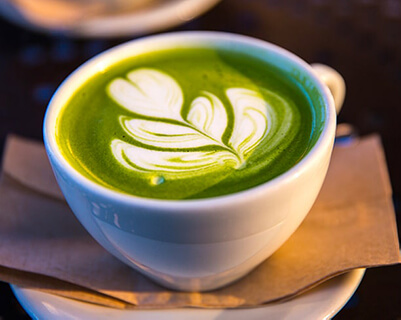 Once associated mainly with ceremonies and specialist tea culture, matcha has become popular in kitchens around the world. Its vivid colour, vegetal flavour and pleasant bitterness make it an unusual ingredient for both sweet and savoury recipes. Try it in tiramisu, shortbread, cookies, ice cream, crêpes, panna cotta, smoothies or desserts with white chocolate.
Use a modest amount at first: matcha can dominate a recipe if too much is added, and its caffeine contribution still matters when it is eaten in desserts.
Recipe 1: Matcha latte with rice or almond milk
Ingredients, as listed in the French Chabiothé article:
- 1 glass of rice milk (or almond milk)
- 2 tablespoons of hot water
- 1 teaspoon of matcha powder
- 2 teaspoons of unrefined sugar, adjusted to taste
Put the sifted matcha in a cup or small bowl and add the hot water. Whisk until you obtain a smooth paste, then gradually stir in the warmed milk. Sweeten as desired and whisk or froth for a creamy texture. To make an iced version, use chilled milk and pour the well-mixed matcha over ice cubes. Vanilla or cinnamon can also be added as an optional flavouring.
Recipe 2: White chocolate and matcha brownies
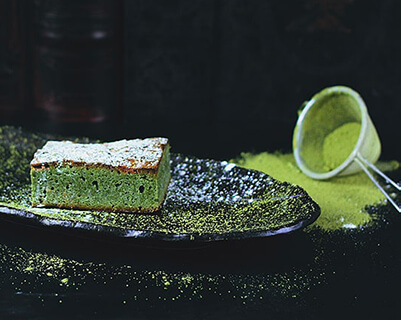
Ingredients from the French recipe:
- 130 g flour
- 20 g matcha
- 250 white chocolate (the unit is missing from the original French ingredient line; confirm that 250 g is intended before publishing a corrected quantity)
- 100 g butter
- 100 g sugar
- 4 eggs
Preheat the oven to 180°C. Mix the flour and matcha. Melt the white chocolate gently in a bain-marie, then melt the butter. In a separate bowl, whisk the eggs with the sugar. Add the melted chocolate and butter, followed by the flour and matcha, and combine into a smooth batter. Transfer to a suitable baking tin and bake for approximately 15 minutes, as in the original recipe. Check that the centre is appropriately cooked for the size and depth of your tin before removing it, then leave to cool and enjoy.
The French article recommends a brownie-style cake tin for this mixture. Oven performance and tin dimensions affect baking time, so use the stated duration as a starting point rather than a guarantee.
Matcha in homemade beauty preparations

Some people also use matcha in DIY face masks and hair treatments. The French article describes traditional and popular claims about antioxidant protection, pollution, the appearance of pores, sebum and shiny hair. These uses can be part of an enjoyable homemade beauty routine, but the powder's composition does not prove that applying it to the skin protects against UV exposure, reverses ageing or strengthens hair.
If trying a homemade cosmetic mixture, use clean ingredients, patch-test first and avoid applying it to irritated skin or near the eyes. Matcha should not replace sunscreen or dermatological care.
Explore more
Matcha, antioxidants, L-theanine and caffeine
Matcha grades, origins and everyday uses
FAQ — How to prepare matcha properly
What is the ideal water temperature for matcha?
As a practical starting point, use water around 70–80°C. Too much heat can exaggerate bitterness; the best temperature also depends on the individual matcha and your preferences.
Should matcha be sifted before whisking?
Yes, it is helpful. Passing the powder through a fine sieve breaks up lumps and makes a smooth, lightly frothy drink easier to achieve, though you can still prepare matcha without doing so.
How do I whisk matcha to obtain a fine foam?
Use a chasen and move it briskly back and forth in a loose M or W pattern rather than slowly stirring in circles. Continue until the powder is evenly suspended and the surface has a fine layer of bubbles.
Can I prepare matcha without a bamboo whisk?
Yes. A small ordinary whisk, a handheld electric frother or a tightly closed shaker can work. The preparation may be less traditional, but it can still be delicious if the powder is properly dispersed.
Can matcha be served cold?
Absolutely. Whisk it first into a smooth mixture with a little cool or lukewarm water, then add chilled water or milk and ice cubes. A shaker can be especially useful for a cold matcha latte.